Yacht VAT explained: VAT paid vs VAT not paid
VAT status changes what a yacht costs and where you can use it. Learn what "VAT paid" and "VAT not paid" mean, and how to check before you make an offer.
Updated 2 min read
Key points
- VAT paid means EU VAT has been paid on the boat, so you can use it in the EU without paying it again.
- VAT not paid means VAT is still due. In Spain the standard rate is 21%, unless the boat stays under a temporary customs regime.
- The status is only as good as the papers behind it. Ask for proof before you pay a deposit.

The short answer
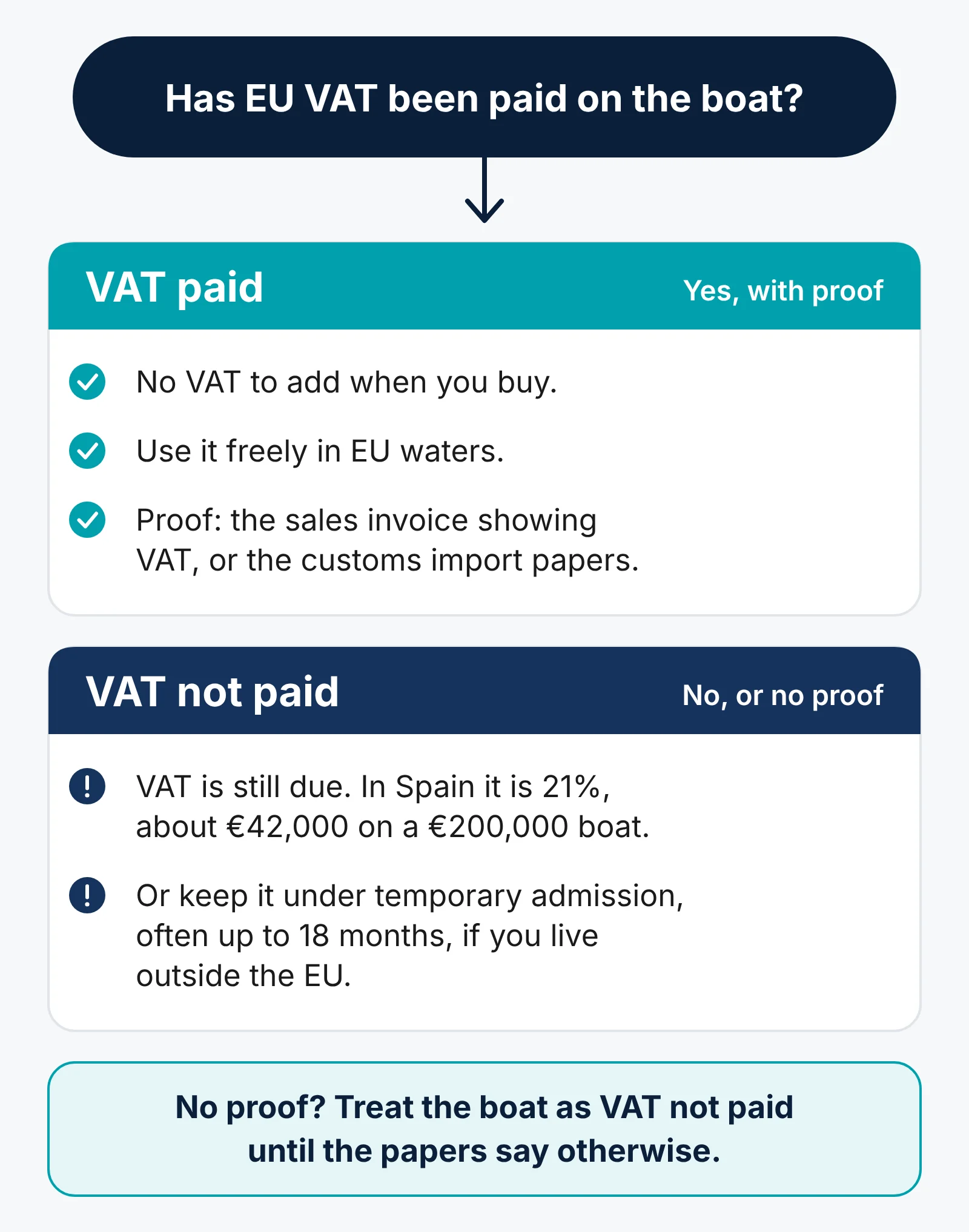
Every yacht in the EU has a VAT status. If EU VAT has been paid on the boat, it is "VAT paid". If it has not, it is "VAT not paid". The status stays with the boat from owner to owner, and it can change the price by a large amount.
VAT paid
EU VAT was paid at some point, usually when the boat was first sold new in the EU or imported with VAT. You can use the boat in EU waters, and sell it to another EU buyer, without a new VAT bill.
VAT not paid
VAT is still due. This is common for boats built or kept outside the EU. To use one in the EU you either pay the VAT or keep the boat under a temporary customs regime. In Spain the standard rate is 21%, which is about €42,000 on a €200,000 boat. Temporary admission is usually limited to around 18 months and is open to owners who live outside the EU. The exact amount depends on the boat's value and the country, and we calculate it for you.
Check before you make an offer
- Ask for the original sales invoice showing VAT, or the customs import document.
- Look for the previous registration papers and any customs status document.
- Have your broker review the papers before you pay a deposit.
- If the seller cannot prove the status, price the boat as VAT not paid.
Customs status and VAT status are related but separate, and the detail depends on the boat's history. Send us the listing and we will check the papers for you.
Boats for sale that match this guide
See all 1
General information, not legal, tax or financial advice. Rules change; check your own case with a professional or ask us.